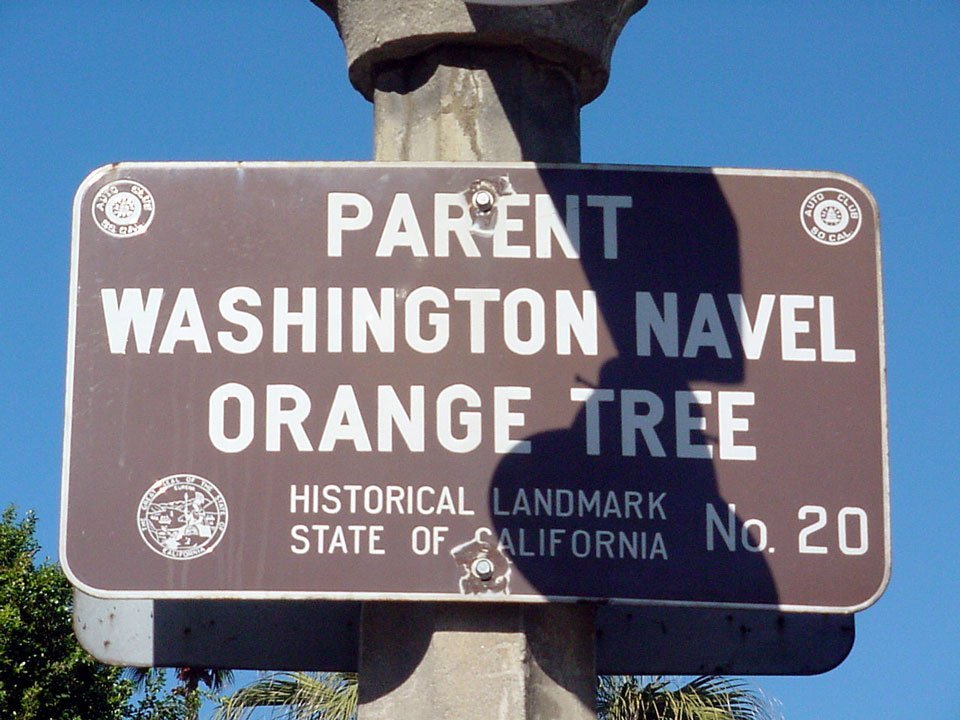
2000- California Historical Landmark No. 20 located in Riverside (RXSQ)

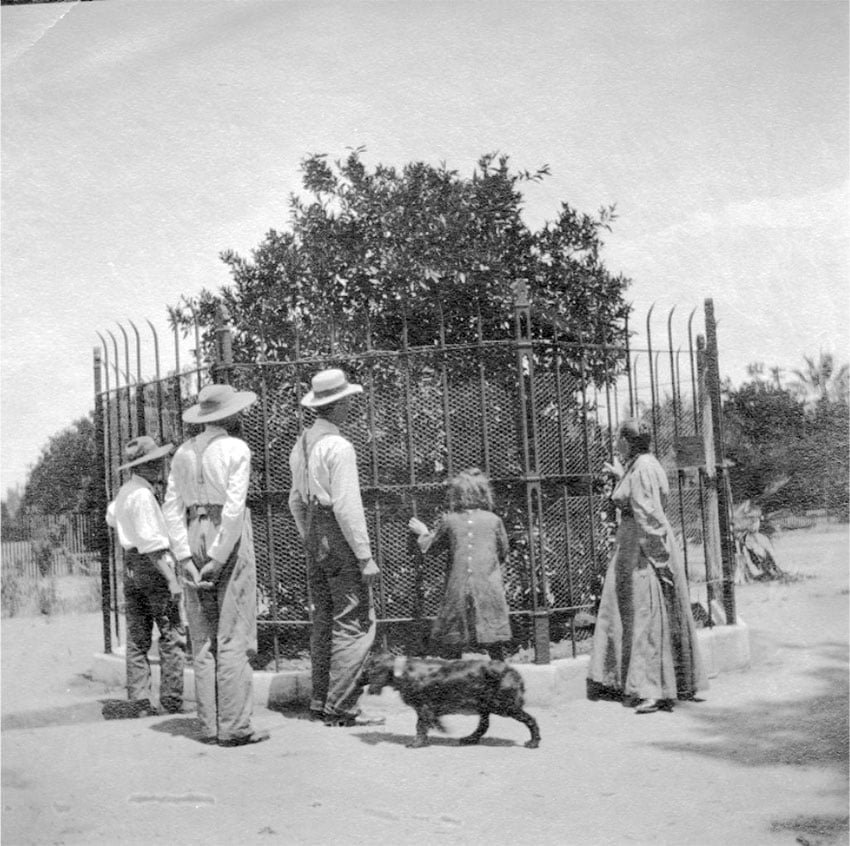
Riverside’s navel orange
From a recent edition of the Los Angeles Times:

The bronze plaque tells the tale: “The most valuable fruit introduction yet made by the United States Department of Agriculture.”

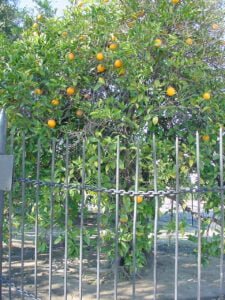
And there, at Magnolia and Arlington avenues in Riverside, stands the last of California’s original Washington navel orange trees, enclosed by an iron fence, looming over the plaque in the summer sun.

It is the tree that launched the storied citrus industry in the Riverside area, an industry that helped shape the world’s view of Southern California as a tropical paradise in the early 20th century.

Los Angeles Times – August 5, 2004
For those who don’t know, from this very navel orange tree (and a second sibling tree that died long ago) descended every Washington Navel orange tree in California, spawning California’s highly-successful — and very lucrative — navel orange industry. Some historians have referred to it as the second “gold rush” for California.

Related


11d-riv-2011c-groves-054a-800.jpg

Image 50 of 60

Though high land values remain a constant threat, strict growth-control limits enacted in 1979 and 1988 have managed to protect large tracts of Riverside's citrus groves, some of which still stand in the city's "Arlington Heights" greenbelt.

Sources: Los Angeles Times (LAT-20040805), California Citrus State Historic Park; NOTE: Published dates for some online versions of newspaper articles cited may not match their archival source date.

2024 PAGE UPDATE: Added additional info/context; added link to June 2019 news article; removed outdated link to photo gallery and added 2011 photo slideshow.

Similar Posts

  • Library/museum expansion guidelines approved

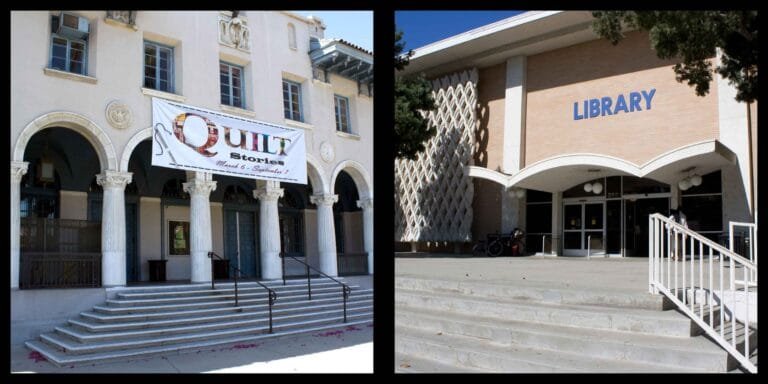
    Last Tuesday, the Riverside City Council approved in concept the recommendations for the future expansions of downtown’s Main Library and Riverside Metropolitan Museum as outlined by a community task force. The recommendations, which have also been endorsed by the governing boards of both institutions, call for the library to double in size to 120,000 square…

  • |

    Gallery: Riverside — Historic County Courthouse

    Designed by Franklin P. Burnham of the Los Angeles architectural firm of Burnham and Bliesner, the cost of constructing the Beaux Arts styled courthouse was just under $168,000 (structure only). Construction began on May 7, 1903 and was completed June 23, 1904. In 1995, the courthouse underwent a 3-year, $24.7 million renovation and seismic upgrade….

  • |

    Gallery: Riverside — Mission Inn

    Built by Frank Augustus Miller in seven major phases between 1902 and 1931, the historic Mission Inn hotel covers an entire city block in downtown Riverside. The Inn’s four “wings” — Mission, Cloister, Spanish and Rotunda — are a collection of varying and eclectic architectural styles. The primary architects of the Inn were Arthur Benton,…

  • | |

    Gallery: Riverside — Main Street Pedestrian Mall

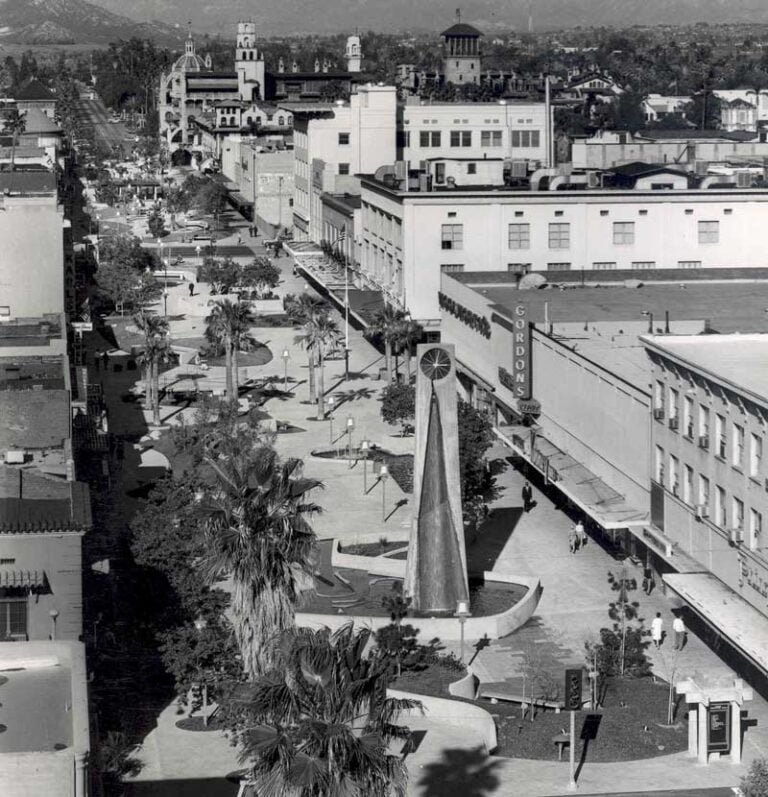
    Following the 1956-57 opening of the Riverside Plaza mall, downtown shopping began a slow but steady decline. In response, city leaders quickly began working at remaking the city’s civic center. Discussions took place regarding additional parking, modernized storefronts, and streetscape improvements. In June 1958, Los Angeles architectural firm Welton Beckett & Associates presented a downtown…

Leave a Reply

Your email address will not be published. Required fields are marked *

This site uses Akismet to reduce spam. Learn how your comment data is processed.