Inland SoCal’s demographics rising

Since 1980, Inland Southern California’s population has more than doubled from 1.5 million residents to 3.6 million (Census – 2003 county estimates). If ranked separately, it would be country’s 13th most-populous region (sandwiched between Miami and Seattle metro areas).
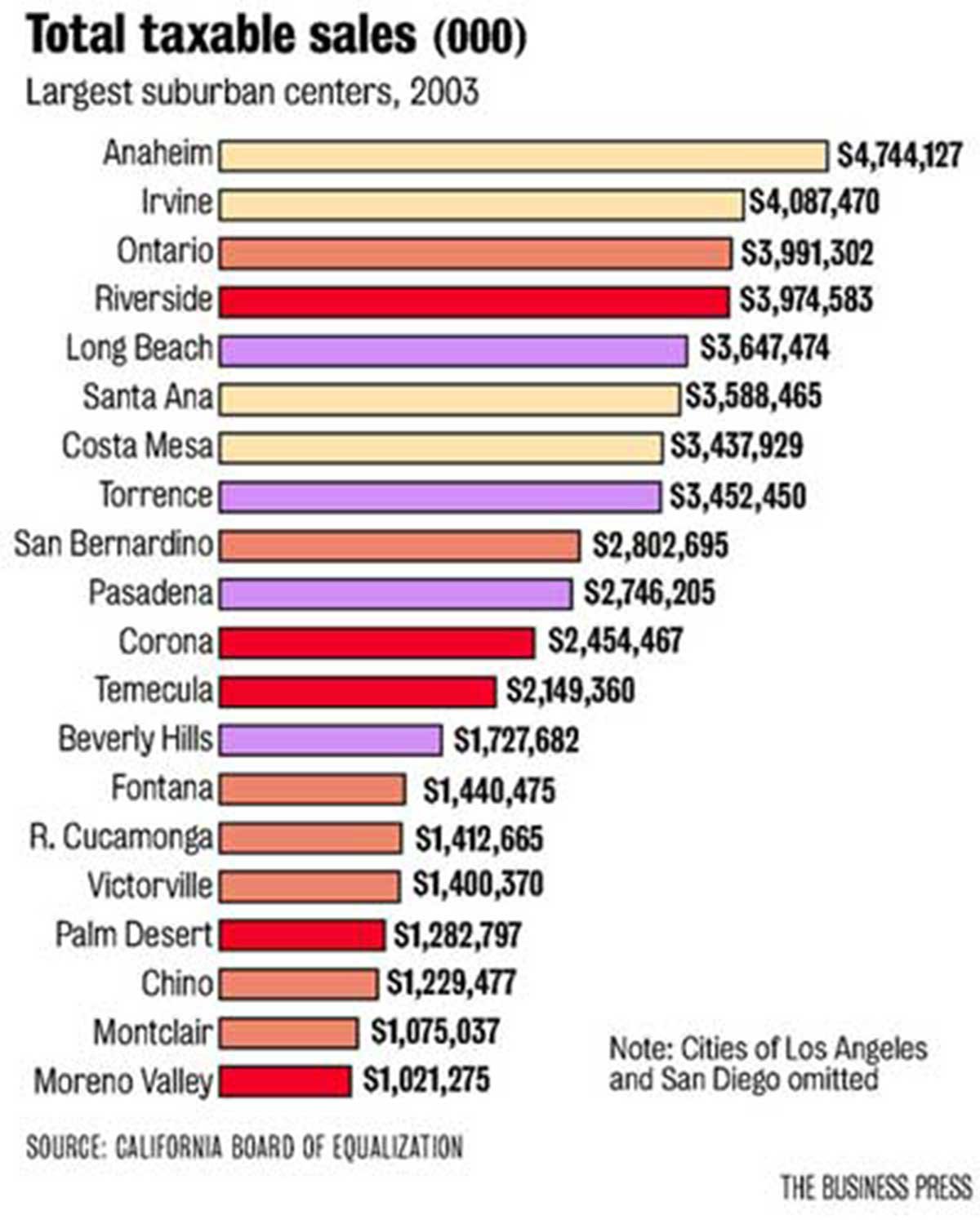
Along with such phenomenal growth has come large jumps in other demographic stats, such as job growth, median income, taxable sales (see chart), and of course, median home prices.
Though the region still lags a bit in a few key aspects relative to some areas of Greater Los Angeles, the new demographics beginning to rise locally are likely to surprise many Southern Californians when compared with better-known cities of Los Angeles and Orange counties:
According to the 2000 Census, the median income (one-half of families above and below) of Chino Hills was $78,374. Amazingly, the Census found that the median income of Beverly Hills was just $70,945 and Laguna Beach was only $75,808. Not only was the income of Chino Hills much higher, so was its population: 76,401 versus 35,701 in Beverly Hills and 24,751 in Laguna Beach.
The Business Press – February 21, 2005
Update: In a related article, Claremont-based Glencrest Investment Advisors Inc. (then part of PFF Bancorp Inc., AKA Pomona First Federal Bank) noted the number of Inland Empire millionaires, most of whom reside in the Palm Springs area of Coachella Valley in Riverside County’s desert region.
The Inland Empire has built a reputation as a bastion of warehouses and endless tract housing, but a Claremont investment advisory firm’s wealth study paints the region as a playground for the rich.
The Business Press – April 25, 2005
The top ten breakdown for local cities was as follows:
| 1 | Palm Desert | 1,881 |
| 2 | Rancho Mirage | 1,063 |
| 3 | Riverside | 886 |
| 4 | La Quinta | 827 |
| 5 | Redlands | 626 |
| 6 | Claremont | 625 |
| 7 | Upland | 572 |
| 8 | Indian Wells | 530 |
| 9 | Palm Springs | 397 |
| 10 | Murrieta | 349 |
The findings were from a soon-to-be published report titled, “Inland Empire Wealth Study 2005.”
Related
- The Business Press – Inland Empire shifting to quality growth (Feb. 2005)
Sources: The Business Press/Riverside Press-Enterprise
2024 PAGE UPDATE: Added newspaper citation/insert and data table; removed outdated links to newspaper article.