Riverside’s navel orange
From a recent edition of the Los Angeles Times:
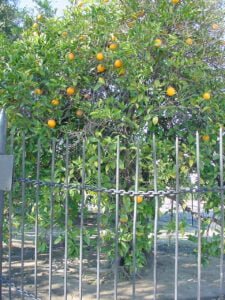
The bronze plaque tells the tale: “The most valuable fruit introduction yet made by the United States Department of Agriculture.”
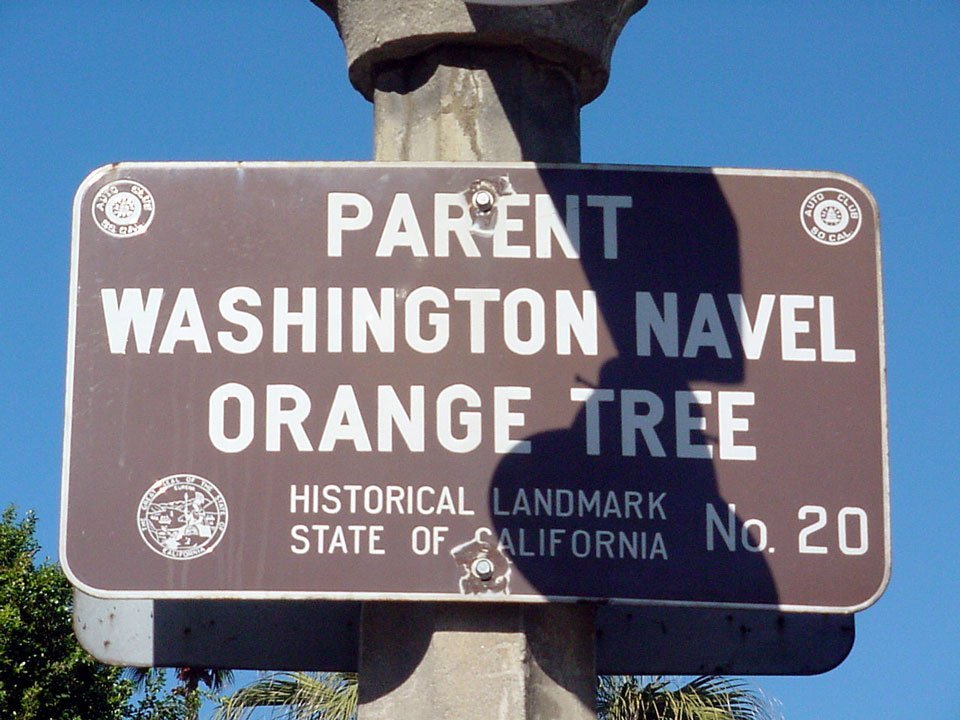
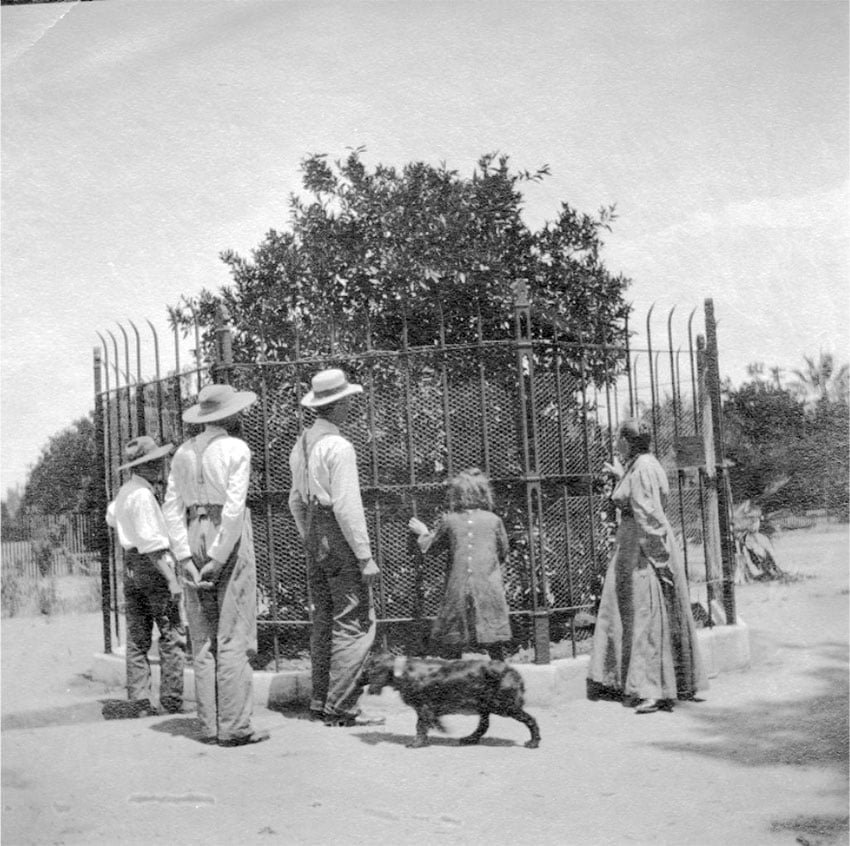
And there, at Magnolia and Arlington avenues in Riverside, stands the last of California’s original Washington navel orange trees, enclosed by an iron fence, looming over the plaque in the summer sun.
It is the tree that launched the storied citrus industry in the Riverside area, an industry that helped shape the world’s view of Southern California as a tropical paradise in the early 20th century.
Los Angeles Times – August 5, 2004
For those who don’t know, from this very navel orange tree (and a second sibling tree that died long ago) descended every Washington Navel orange tree in California, spawning California’s highly-successful — and very lucrative — navel orange industry. Some historians have referred to it as the second “gold rush” for California.
Related
- Los Angeles Times – A navel worth gazing at: Tree made history (Aug. 5)
- Riverside – California Citrus State Historic Park
- 2019 Update: Riverside Press-Enterprise – Riverside parent navel orange tree getting new protection (June 6)
Slideshow: 2011 – Riverside’s Citrus Legacy
10a-ucr-1912-citrus-old-001-500.jpg
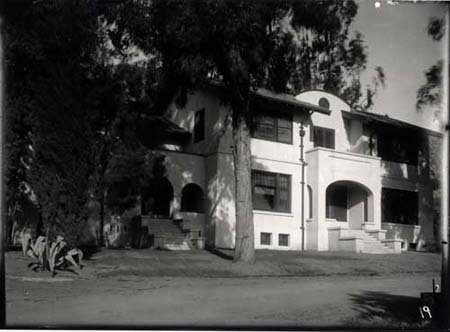
Citrus Experiment Station (CES) -- Glenwood Drive at 14th Street. Established at the base of Riverside's Mount Rubidoux in 1907, the original CES building (and grounds, both of which remain today) is essentially the birthplace for modern-day UC Riverside.